 English




Our software understands customer behavior to recommend products the customers will want to buy.

Key takeaways
- Nonlinear shopping: Shoppers bounce, compare, and change their minds. Recommendations keep discovery flowing without extra searching.
- Three success factors: Winning modules combine relevance, variety, and clean product data so AI can match intent in context.
- Six core types: Each fits different placements, and learn which ones will enhance customer experience.
- Multi-metric impact: Recommendations lift AOV and conversion rates, reduce choice overload, and prevent sessions from ending.
- Measurable revenue driver: Track engagement and conversions by type, placement, then repeat to turn insights into incremental gains.
Shoppers don’t always know exactly what they’re looking for, or browse in a straight line. They jump between categories, compare similar products, abandon carts, and often change their minds mid-session.
Well-timed product recommendations help guide product discovery, reduce decision fatigue, and increase average order value without forcing users to search again.
In this article, we explore different types of product recommendation examples, explain why they work, and where they perform best.
What are product recommendations?
Product recommendations are a defining feature of product recommendation software, designed to enhance the e-commerce shopping experience by suggesting related items that resonate with a user’s browsing history and online behavior. An effective product recommendation example is when a customer views a specific smartphone and is recommended accessories such as cases or screen protectors.
They also leverage personalization, such as recommending books based on previous purchases or suggesting outfit combinations in fashion retail. Using artificial intelligence (AI) and machine learning (ML), these strategies help e-commerce businesses boost sales and increase the average order value (AOV).
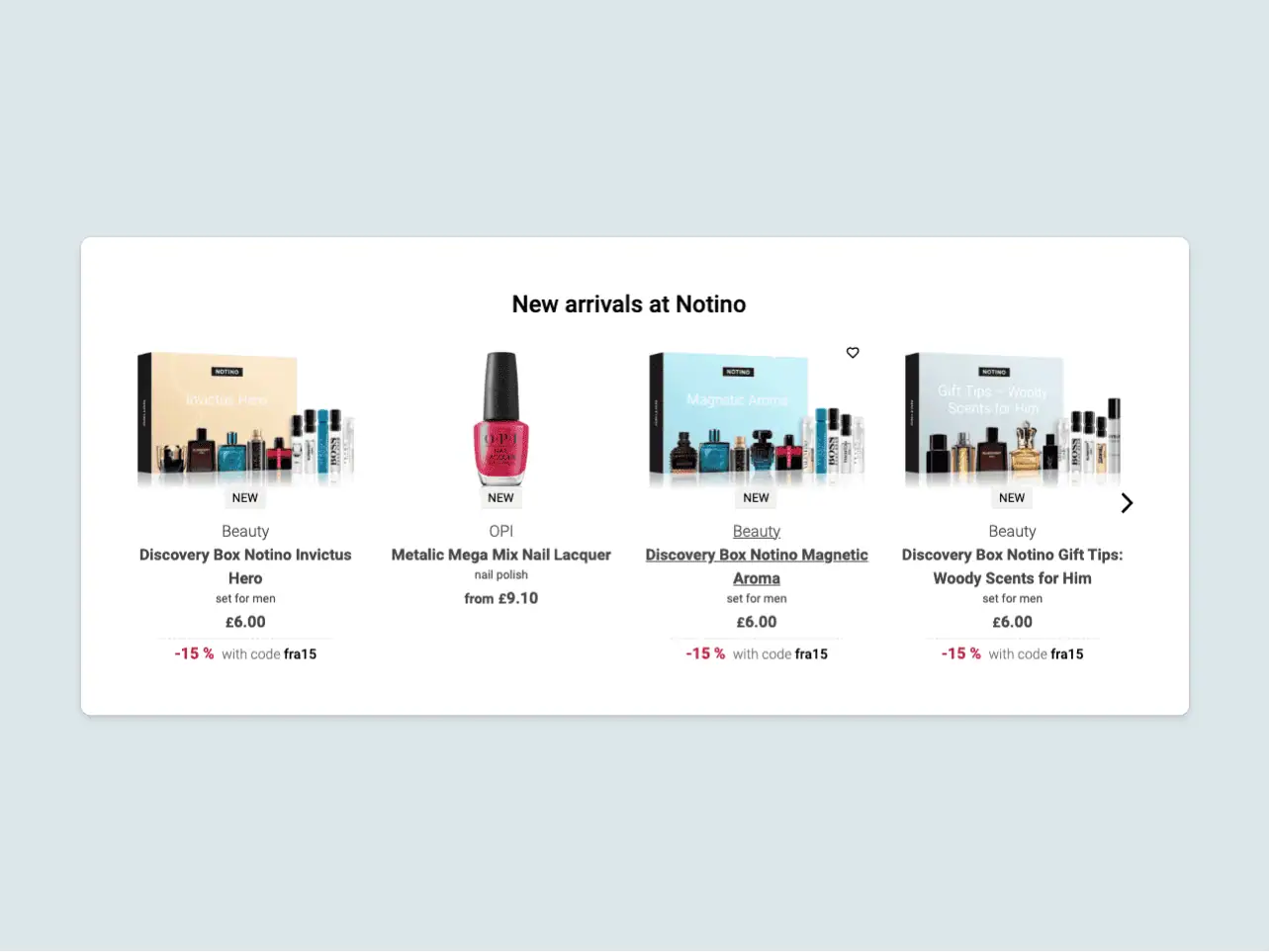
Product recommendations on the Notino home page.
Source
Source
What makes e-commerce product recommendations effective?
The best e-commerce product recommendations don’t rely solely on design. They succeed because they align with the intent and reduce customer effort.
Across industries, the best-performing recommendation modules share three qualities:
Relevance
Recommendations must make sense in context. Generic “bestsellers” can work, but personalized and context-aware modules perform better because they reflect real user intent. In many cases, stores achieve this through a behavioral recommendations feature that uses accurate browsing and purchase data to recommend the best product for each customer based on their behavior.
Variety
Shoppers don’t all behave the same way. A mix of cross-sell, upsell, alternative suggestions, and behavioral modules creates a more complete discovery experience.
Data quality
Even advanced AI can’t recommend what it can’t understand. Clean product attributes, accurate categories, and structured metadata dramatically improve the product data enrichment process.
Types of product recommendations
This section will explore different product recommendation examples and highlight the best placements for each. Understanding these options will help you choose the right strategies to boost engagement and sales on your e-commerce site.
| Type | Description | Placement |
|---|---|---|
| Type Alternatives | Description Similar to the product you’re currently viewing (but priced slightly higher). |
Placement
product detail |
| Type Recommended for you | Description Similar to the products you previously viewed (and didn't buy). | Placement home page, 404 |
| Type Last seen | Description Recently viewed products. | Placement home page, category, product detail, 404 |
| Type Complements | Description Products that pair well with the item you're currently viewing. | Placement product detail, cart, cart pop-up |
| Type Bestsellers | Description Trending products based on margin, newness, and discount. | Placement home page, category, 404 |
| Type Articles and e-mails | Description Recommended products relevant to the article or e-mail copy. | Placement article detail, e-mail |
Benefits of product recommendations in e‑commerce
Product recommendations are one of the few tools that influence multiple revenue drivers at once. When implemented correctly, they can:
increase average order value through cross-sell and upsell
- improve conversion by reducing choice overload
- boost product discovery by surfacing items shoppers wouldn’t find on their own
- increase repeat purchases through personalization
- recover sessions that would otherwise end in exit
They can also help improve merchandising performance by reinforcing visibility rules and supporting better product ranking, especially for high-margin items or seasonal campaigns.
To illustrate the importance of product recommendation in e-commerce, they can act as a safety net, offering relevant alternatives and keeping users engaged even when search results fall short.
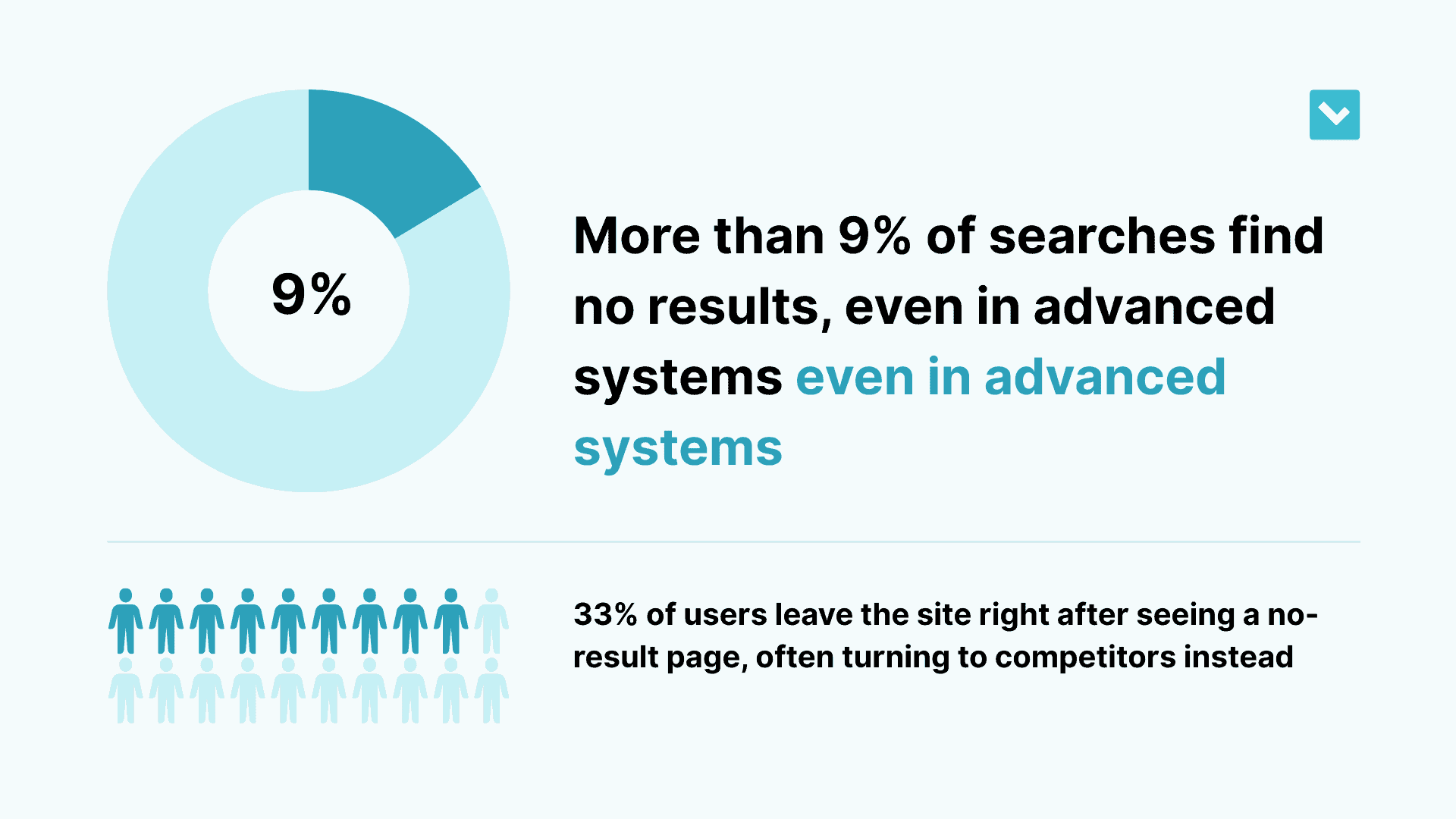
Luigi's Box statistic on no-result searches
How to measure product recommendation performance
Treat product recommendations as measurable revenue drivers rather than decorative elements on the website. As customers continue to receive relevant and timely suggestions, their total spending and repeat purchases grow, driving higher overall lifetime value.
To understand the real impact of product recommendations, track e-commerce search metrics, and identify which recommendation types drive the most engagement and conversions.
Measuring consistently allows you to refine both recommendation formats and placements, turning insights into incremental revenue gains.
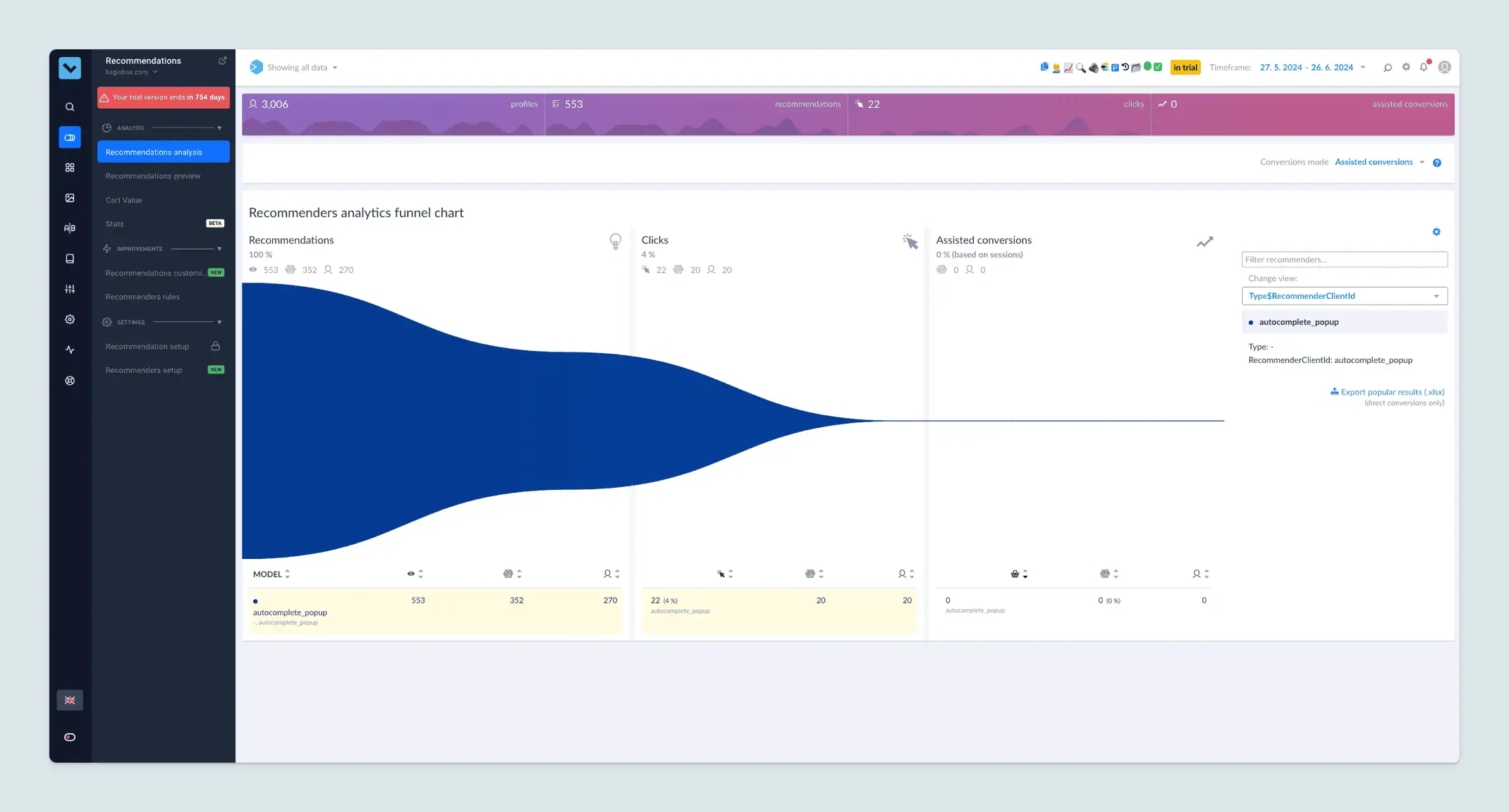
Luigi's Box Analytics providing valuable data for website owners.
And yes, we know all this because we've been working on a product recommendation tool for years
It’s called Luigi’s Box Recommender, and it:
- integrates seamlessly with every e-commerce platform
- motivates prospective customers to make a purchase
- provides a thorough performance analysis
If you want to discuss how it can improve YOUR website, you can contact our team of specialists, who will explain everything.
Conclusion
Effective product recommendations transform your e-commerce store into a personalized shopping experience that drives customer engagement, boosts sales, and builds long-term customer loyalty.
By strategically placing recommendation widgets at key points in the customer journey, you can guide visitors toward the products that matter most to them, increasing their satisfaction and maximizing your store’s potential.
Start implementing these strategies today to see how powerful personalized recommendations can be for your business.
Frequently asked questions
How do product recommendations work in e-commerce?
Product recommendations use AI and machine learning to analyze customer behavior and suggest items based on their preferences, browsing history, and purchase intent. This personalized approach helps boost sales and improve the shopping experience.
Where should I place product recommendations on my e-commerce site?
The best places to display product recommendations include the home page, product detail pages, the shopping cart, and category pages. Strategic placement at key points in the customer journey can increase engagement and drive sales.
What types of product recommendations are most effective?
Popular recommendation types include alternatives to the currently viewed item, recently viewed products, and complementary items. Each type serves a different purpose, such as increasing average order value or helping users find related products.
How do product recommendations impact customer loyalty?
By offering personalized suggestions, product recommendations create a more engaging and tailored shopping experience. This makes customers feel understood, leading to repeat visits and building long-term loyalty.
Filip Kubelka heads product marketing at Luigi’s Box. His background is in translation and it shapes how he thinks about search: precision matters, and the words you use to describe a problem usually reveal whether you understand it. He writes about what e-commerce teams are really struggling with when it comes to search and discovery.
More blog posts from this author